

Q&A: On the Dramatic Conflict
Our Chicago Dramatists playwrights and teachers discuss their craft and share inspiration and advice on a host of topics. Columns originally appeared in the Chicago Dramatists newsletter and are edited here for general interest.
Reginald Edmund shares the formula
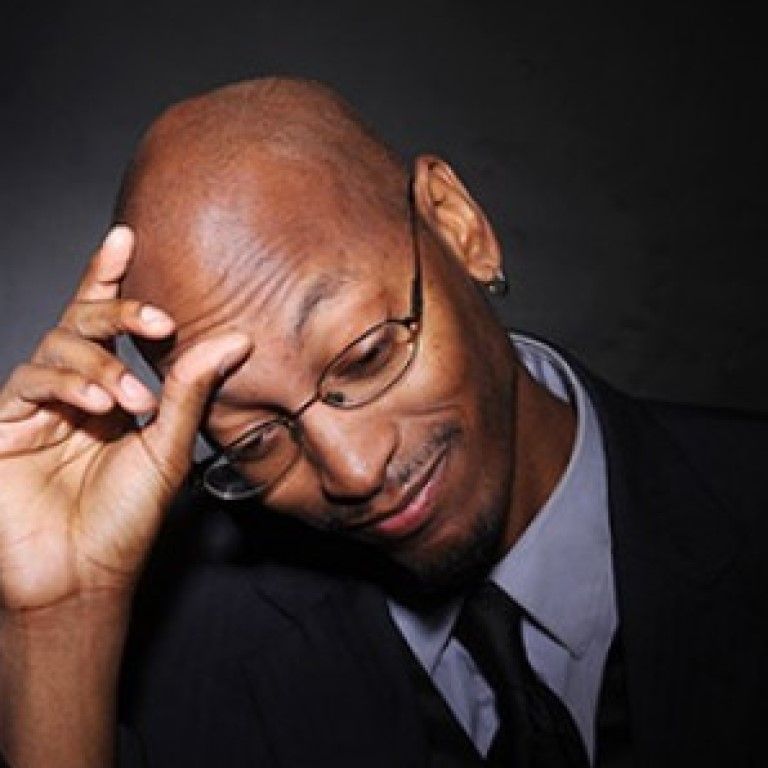
CD: One of the hallmarks of Chicago Dramatists is that our teachers are successful playwrights. Your play, "Southbridge," was runner up for the Kennedy Center’s Lorraine Hansberry and Rosa Parks National Playwriting Awards, and most recently won the Southern Playwrights’ Competition, the Black Theatre Alliance Award for Best New Play and the Edgerton Foundation New American Play Award. What have you learned through the development of this play that informs your teaching?
Reggie: Developing Southbridge, a play rooted in a real 1881 lynching in Athens, Ohio, was a deeply transformative journey, one that taught me lessons I carry into every classroom I enter.
First, I learned that the stage is not just a space for entertainment but a sacred vessel for communal healing. Southbridge was not an easy play to write or develop. Its themes: racial violence, trauma, love, and the longing to be seen, demanded rigorous honesty and emotional vulnerability. Through the development process, I had to listen, not just to my characters, but to the echoes of history and the present moment. That act of deep listening is something I try to instill in my students: that writing is not only about crafting dialogue but about creating space for voices that have long been silenced.
Second, I learned that the development process is where theory meets fire. Workshops, rewrites, rehearsals that’s where I discovered the real work: how to shape moments for maximum emotional impact, how silence on stage can speak louder than words, and how every character—no matter how small—holds a piece of the play’s moral architecture. These insights don’t come from textbooks; they come from the doing. And that experiential wisdom is what I bring to my students not just how to write plays, but how to build them, scene by scene, beat by beat, with purpose and soul.
Finally, Southbridge taught me that storytelling is an act of radical visibility. The character Christopher C. Davis wrongfully accused, longing to be seen as fully human mirrors a struggle that I feel many of my students’ face: how to write themselves into a world that often overlooks them. I believe that my job as a teacher is to help them do just that. To help them be heard, and more importantly, to be seen.
That’s the most valuable thing I’ve learned from making plays, not just how to write, but why we must write. Because somewhere, someone is still standing on that proverbial tree stump, crying out, “Can you see me?” And theatre, when done right, our job is to answer back: Yes. We see you.
CD: Plays in Progress was taught--by you-- at Chicago Dramatists for the first time last quarter. Arlene and I developed the concept because we felt that writers who were already launched on a project would appreciate the space, structure and feedback to advance their work week-by-week. Were we right? Did the concept work? How did you take that concept and shape it to fit your pedagogy?
Reggie: Yes, you were absolutely right! The Plays in Progress concept resonated deeply with the writers. The space, structure, and regular feedback provided exactly the kind of grounding and momentum that writers crave once they've committed to a new project but still need guidance to carry it through. In shaping the class, I leaned heavily on my own creative philosophy: that storytelling is both ritual and acts of revolution. We interrogated the emotional logic of characters, the structure of scenes, and the deeper cultural roots of each story. I found that writers responded powerfully to this, especially those working on stories that were personal, political, or spiritually driven.
CD: Years ago, a teacher asked me an insightful question about one of my plays. It pointed to a problem I needed to address. But I just couldn't resolve it, and I froze. What advice or techniques do you share with students when they confront a challenge they can't seem to think or write their way out of?
Reggie: I always return to the formula: Goal plus Obstacle times Lack of Compromise equals Conflict. That equation has been a compass for me, especially when I am stuck in the weeds of a play and cannot see the path forward. When students, and yes even when I myself, hit a wall and cannot think or write their way out of it, I tell them: Go back to the root.
Ask yourself:
- What does my protagonist want more than anything in the world?
- What is in their way both internally and externally?
- And most importantly: Why won’t they compromise?
Because that refusal to bend is where drama lives. When writers cannot move forward, it is often because they have not answered one or more of those questions clearly. They may know what happens, but not why it matters. Or they have built a beautiful world but no engine for their shiny car to drive through it, or they load the car up with so many things it struggles to move.
CD: You've said you believe "playwriting is a potent tool for social commentary and fostering empathy." I think we're in a time with plenty of social commentary but maybe not enough empathy. Do you have exercises or techniques you offer playwrights who want to evoke empathy?
Reggie: I tell students: You don’t have to agree with your characters. But you do have to love them enough to understand them. Empathy in playwriting is not about absolution. It is about illumination. It is about showing people not as heroes or villains, but as human we're all messy, contradictory, hungry for something. That’s what our audience connects to. That is what causes them to talk about your play when they leave the theatre and not about where did they park the car.
CD: Students in your class get more than instruction in playwriting and feedback on their work, you also offer advice on the "practical considerations of getting a play produced, such as working with directors and actors, submitting to festivals and competitions, and navigating the publishing process." I think there's a real need for such information because many of our CD members express that, once they've written and rewritten and rewritten their work, they aren't sure what to do to launch it into the world. Can you give us three pieces of advice for what comes next?
Reggie: It’s true. I believe teaching playwriting doesn’t stop at the final draft. For many writers, the scariest part is not writing the play but what comes after. So, in my class, I treat the page and the process with equal importance. Here are three essentials I always share with my students for taking that next step:
- The Artistic Statement:
This is your why. Why you write, what stories you are called to tell, and how your work fits into the wider theatrical landscape. This is your foundation. When the industry asks who you are as a writer, you want to have a clear, grounded answer. - The Cover Letter and Letter of Inquiry:
A good letter shows not just that you wrote a play, but that you’re submitting it intentionally to the right opportunity. Your letter of inquiry should introduce your project if you’re reaching out to a director, producer, or theatre with whom you want to build a relationship. - The Production Bible:A production bible is a document (or folder) you build as you write and develop your play. It includes your logline,
synopsis, cast list with descriptions, development history, your bio, a high-res photo of you, and any notes on tone, music, or visual world. Think of it as your play’s resume. When someone expresses interest, you’re ready and not scrambling.