Q&A: On Politics and Plays
Our Chicago Dramatists playwrights and teachers discuss their craft and share inspiration and advice on a host of topics. Columns originally appeared in the Chicago Dramatists newsletter and are edited here for general interest.
Toccara Castleman and Stefan Brün share insights on plays that go “Pow!”
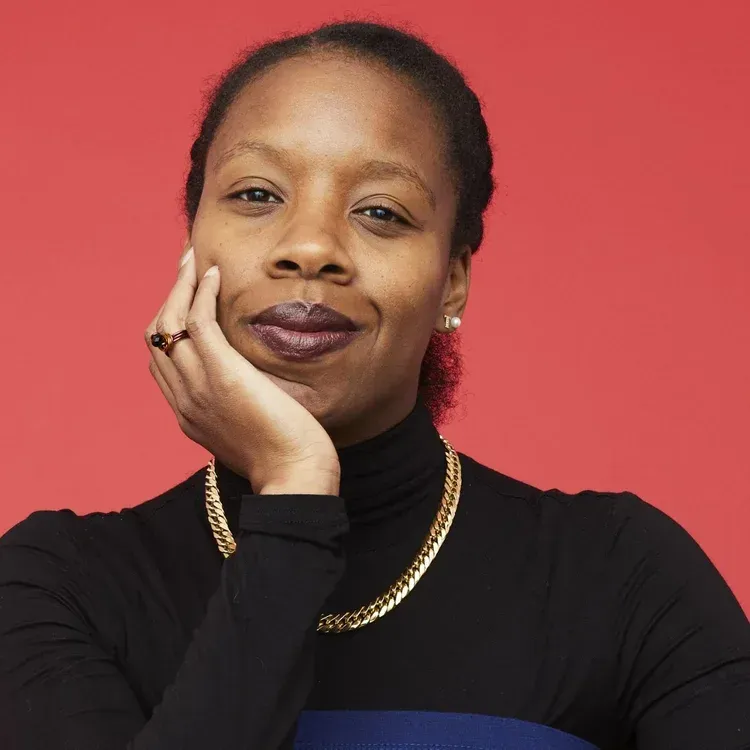
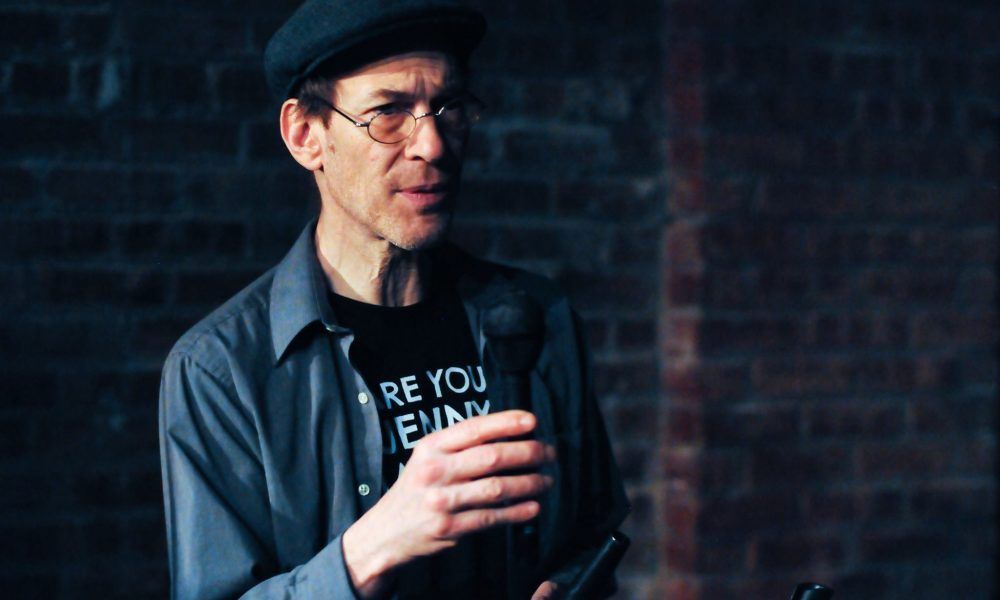
CD: A question for both of you: we're so inundated with politics now, how do you reach audiences who might be thinking "Enough!"
Toccara: On the surface, my play,
Maybe a Mexican, is about a man who decides to run for President because he feels ignored by the political system. But the greater throughline is the topic of visibility, which is a facet of our everyday lives that exists beyond politics. And if you take a deeper dive into the narrative, audiences will be delighted (I hope) to discover that it's also a story that uses humor to explore the themes of identity, friendship, community and belonging. We're all just trying to find our places within the world, which is something we can all connect on. So instead of "Enough!" I'm hoping audiences will walk away thinking "More!...I want more of that."
Stefan: I think the primary challenges for making political plays, at this time, lie with shedding old categorizations or constraints that no longer work toward evoking forthright truth in the room. This extends from how we write (thinking more of a collective act from multiple viewpoints, than of a singular genius at their desk) to how we work, creating two-way dialogues with the practitioners of the many discrete crafts theater is made up of, thinking about who gets to work representing what and under which conditions....I could go on, that's why I’m teaching a class!
CD: Political plays can have a “ripped from the headlines” energy that’s powerful, but as artists we want our work to remain relevant long after the crisis-of-the-day resolves. Toccara, how has the passage of time informed the development of your play and, Stefan, how can Brechtian theatre techniques continue to enliven work today?
Toccara: I was inspired to write this play after Obama's second Presidential win. I was reading a lot of commentary about what he owed the country and specifically Black America. I was coming across different pieces of editorial that were theorizing who should be next after Obama-- a woman? An Indigenous person? I started to wonder what it would look like if someone else from an unexpected community sat in the Oval Office. What would that person owe themselves and what would be expected of them because of their cultural background? I wanted to use politics as a gateway to answer these questions, while also exploring how simply being in one's body as a Black, Latinx, Indigenous or Asian person becomes inherently political.
Stefan: I strongly feel that Brecht--and also Augusto Boal, Caryl Churchill, Anne Bogart, Tina Landau-- contributed to that lively force of upheaval, renewal and stripping away of antiquated pretentiousness and coy concealment to make a theater that people continue to want to gather with each other to work on and to attend. So, for instance, in class, we use examination of the group-writing, gestic, estrangement, montage, use of song, use of image, use of visual text, provocative and humoristic techniques Brecht practiced, in quite varying forms, throughout his tragically shortened career. I also have particular interest in his theories about character building, for instance, the big selfish characters who are of 'more use' to others than the virtuous small characters, and about how Brechtian theater advanced the image of women and emotional labor in society.
CD: One of the best benefits CD offers is the opportunity to learn from peers. So, Stefan, what would you like to learn from Toccara?
Stefan: When writing about characters who are trying to make an artistic life within our modern society, as artists from non-dominating, non-white, identities, Toccara, how do you find the distance from such familiar experiences, to approach them with humor, with compassion and so escape the pitfalls of confessional authenticity?
Toccara: I know, trust, and believe that marginalized people--and Black people in particular-- are more than our traumas. Bad things happen, sad things happen, atrocities happen but then there is also joy, and laughter and understanding. We are fully dimensional people who wrestle with the same aspects of everyday life from the mundane to the magical-- just like everyone else. And because I know this on a visceral level as my own lived experience - that I am **not** a sad story. My people are **not** a sad story. Some degree of lightness and levity is always present within my work-- because I don't know any other way to create.
CD: Toccara, it’s your turn. Stefan has a long and varied history as an artist and teacher. How can his experience inform yours?
Toccara: I’d like to know the exact moment Stefan decided that he wanted or needed to be an artist. Stefan, after this discovery, who was the first person you told that art would be at the forefront of your life? Yourself? Your parents? Your first audience?
Stefan: Honestly, I minced about endlessly. I thought of myself as a technician, a translator, a mediator, an organizer, a protestor, an assistant - all to avoid the immeasurable Rubrik of being an artist. I think as late as 30, when I was getting together with Jenny, partner in child and marriage, I still doubted if being an artist was real. She has a much less complicated approach, around the concept of being a maker. Today I do think of myself as an artistic maker. And I’m nearly 66 years old.
CD: OK, last question for both of you: What are you most excited for people to experience or learn from attending your show or class?
Toccara: I truly hope people enjoy the story and are inspired to think more critically about the communities they belong to and who and what they pledge their allegiances to. I always write for and with Black people in mind because I want to make sure that Black people always feel welcomed and visible. And beyond this, I hope the piece will spark some productive conversations about identity, and the notion that "people of color" exist as a monolith.
Stefan:
Frankly, I’m excited by the progress writers will make in their own work or the inspiration they’ll gain to launch their next big project. I grew up in the Paolo Friere tradition of education, in which the foremost value is to throw away the image of knowledge being shoved down a funnel into passive student heads. Instead, I am excited about participants bringing their points of view to each other's work in a structured and consensual manner.
I also want to mention, in 2024 a highlight of my year was meeting Toccara Castleman, being blown to smithereens by her delightful "I Don't Want To Play Myself" in the Fillet of Solo Festival at Lifeline Theatre and telling her that in my mind this was a refreshing blast of current Brechtian theater.